

Our Services

Water Damage From Supply Line : Complete Guide to Identifying, Repairing, and Restoring Your Home
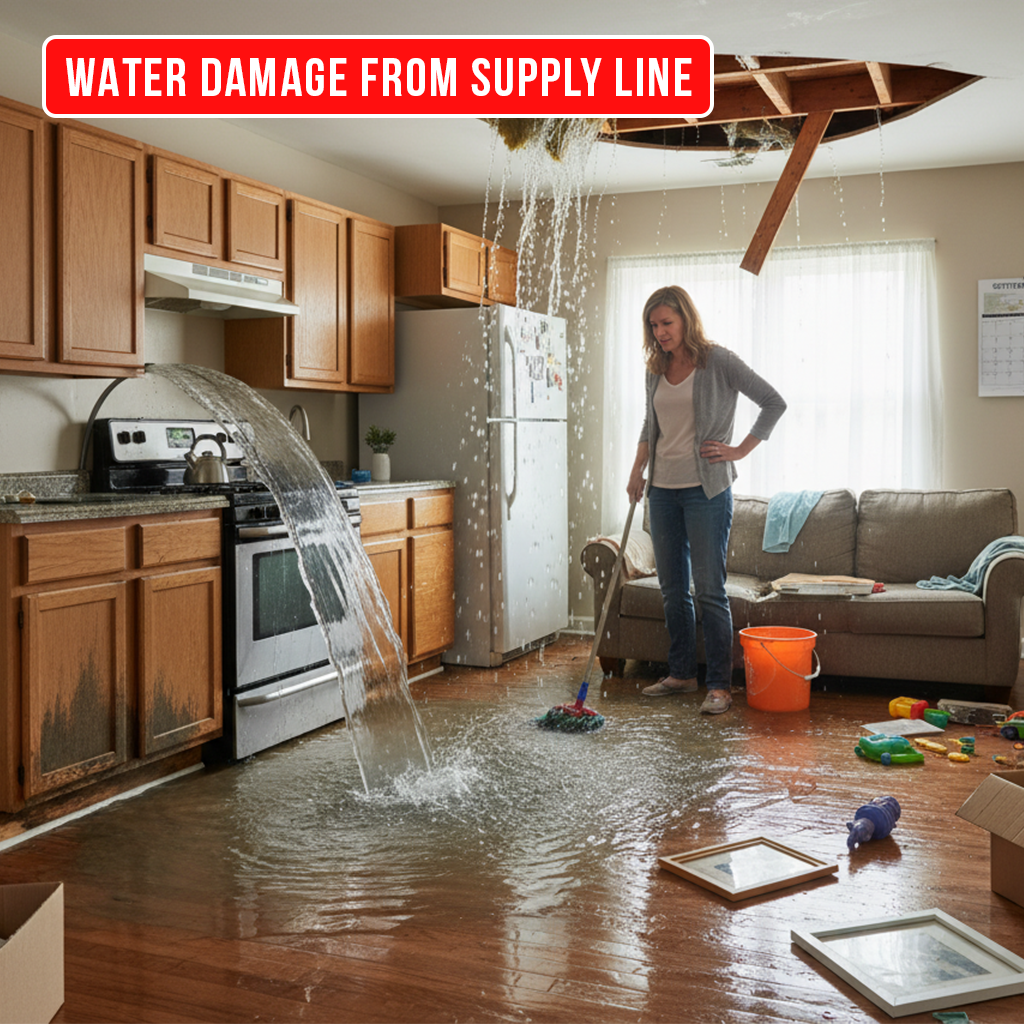
Water Damage From Supply Line is one of the most common and costly problems homeowners face. When a supply line suddenly leaks or bursts, the damage can spread quickly—soaking ceilings, walls, floors, furniture, and valuable belongings. These accidents often happen without warning and may occur in any part of the house, including your living room, dining room, kitchen, or bedrooms. Whether the water comes from a bathroom sink, toilet, bathtub, kitchen sink, water heater, boiler, or frozen pipe, the result is the same: unexpected damage that requires immediate professional attention.
Understanding the causes, effects, and restoration process for water damage is essential to protect your home and ensure a smooth insurance claim. This guide explains everything you need to know about accidental water damage from supply lines, how restoration teams help, and why fast response can save you thousands of dollars. Contact Us
How Water Damage Happens From a Supply Line
A supply line is the pipe that carries water into your fixtures and appliances. Because these lines are always under pressure, even a tiny crack or loose connection can lead to significant water leakage. Some common sources of accidental water damage include:
Bathroom sink supply line leakage
Toilet supply line failure
Bathtub overflow or drain leak
Kitchen sink pipe leaks
Dishwasher and refrigerator supply line breaks
Water heater or boiler burst
Frozen pipe burst during winter
These situations may start small, but water spreads quickly—often unnoticed—until stains, bubbling paint, sagging ceilings, or warped flooring appear.
Water Damage From Supply Line
A supply line is the pipe that carries water into your fixtures and appliances. Because these lines are always under pressure, even a tiny crack or loose connection can lead to significant water leakage. Some common sources of accidental water damage include:
-
Bathroom sink supply line leakage
-
Toilet supply line failure
-
Bathtub overflow or drain leak
-
Kitchen sink pipe leaks
-
Dishwasher and refrigerator supply line breaks
-
Water heater or boiler burst
-
Frozen pipe burst during winter
These situations may start small, but water spreads quickly—often unnoticed—until stains, bubbling paint, sagging ceilings, or warped flooring appear.
Signs You Have Water Damage at Home
Water damage is not always obvious. Some leaks occur behind walls or under floors. Watch for these early warning signs:
-
Yellow or brown stains on ceiling
-
Peeling or bubbling paint
-
Wet or spongy flooring
-
Warped wooden surfaces
-
Musty or damp odor
-
Mold growth on walls or furniture
-
Sudden spike in water bills
-
Dripping sounds behind walls
-
Soft spots on ceilings
If you notice any of these, the supply line may be leaking—and immediate inspection is necessary to avoid severe structural damage.
Areas Commonly Affected by Supply Line Water Damage
Water damage can affect any room connected to plumbing. The most common affected areas include:
1. Living and Dining Rooms
Water from bathroom or kitchen leaks often travels into adjacent living spaces. Ceiling damage, sagging drywall, and soaked carpets are common.
2. Bedrooms
A supply line on the upper level can cause dripping or stained ceilings in the bedrooms below.
3. Kitchen
Kitchen sinks, dishwashers, and refrigerator water supply lines can cause hidden damage inside cabinets and under flooring.
4. Bathroom
Toilet and sink supply lines are among the most frequent sources of accidental water damage. Even slow leaks can create major mold growth.
5. Basement or Utility Room
Water heaters and boilers can fail suddenly, leaving the area flooded within minutes.
Winter Water Damage: Frozen Pipe Burst
In cold climates, supply lines are at high risk of freezing. When the water inside a pipe freezes, it expands, causing the pipe to burst. Once the temperature rises, water starts leaking rapidly.
Frozen pipe bursts often lead to:
-
Immediate flooding
-
Severe ceiling collapse
-
Wall and insulation damage
-
Destruction of flooring
-
Mold growth within 48 hours
These incidents are classified as accidental water damage, and in most cases, are covered by insurance. Restoration companies are trained to handle these emergencies promptly.
Why Water Damage Must Be Handled Immediately
Water damage worsens over time. Within minutes, hours, and days, the situation escalates:
Within Minutes
-
Water spreads across floors
-
Carpets absorb moisture
-
Furniture begins to stain
Within Hours
-
Drywall absorbs water
-
Paint starts bubbling
-
Odors begin forming
Within 24–48 Hours
-
Mold growth begins
-
Structural materials weaken
-
Wood swells and warps
Within Days
-
Severe mold infestation
-
Major structural deterioration
-
High repair costs
Immediate professional restoration prevents long-term damage and saves you money.
Our Water Damage Restoration Process
When you experience accidental water damage from a supply line, our certified restoration team follows a structured approach to restore your home quickly and safely.
1. Emergency Inspection and Assessment
We begin by locating the source of the leak and assessing:
-
Visible and hidden water damage
-
Structural damage
-
Moisture behind walls and under floors
-
Safety hazards
-
Mold risks
Professional documentation is prepared to support your insurance claim.
2. Stopping the Water Source
We immediately stop the leak, shut off affected supply lines, and secure the plumbing system to prevent further damage.
3. Water Extraction and Drying
We use advanced equipment such as:
-
Industrial water extractors
-
Air movers
-
Dehumidifiers
-
Moisture meters
This ensures complete drying of ceilings, walls, carpets, hardwood floors, and hidden areas like insulation and subfloors.
4. Mold Prevention and Treatment
Since mold begins forming within 24–48 hours, we apply antimicrobial treatments and ensure proper drying to prevent future growth.
5. Structural Repair and Restoration
Depending on the severity, repairs may include:
-
Replacing damaged drywall
-
Ceiling repair or repainting
-
Floor and carpet replacement
-
Reinstalling insulation
-
Cabinet repair
-
Plumbing repair
Our goal is to restore your home to pre-damage condition.
6. Insurance Claim Assistance
Most accidental supply line water damage is covered by homeowners insurance. We assist with:
-
Damage documentation
-
Photographs and moisture reports
-
Communication with adjusters
-
Claim preparation
-
Direct billing
This ensures you receive maximum compensation for your loss.
Common Questions About Supply Line Water Damage
Is accidental water damage covered by insurance?
Yes—if the damage is sudden, unexpected, and accidental (like a burst pipe or supply line leak).
Should I clean water damage myself?
No. DIY cleanup cannot detect hidden moisture, which leads to mold and structural issues.
How long does the restoration process take?
Depending on severity, drying and repairs may take 3–10 days.
What if mold is already present?
We provide full mold remediation to make your home safe again.
Conclusion
Accidental water damage from a supply line can happen at any moment and can affect multiple areas of your home—from ceilings and walls to flooring and furniture. Whether it results from a bathroom leak, kitchen sink issue, water heater burst, or frozen pipe, quick action is the key to preventing serious structural damage and mold growth. Professional water damage restoration ensures proper drying, cleanup, and repair while helping you navigate the insurance claim process smoothly.
If you’re facing unexpected water damage—don’t panic. Our team is ready to respond immediately, protect your property, and restore your home to its original condition.